

MissionMars

A new world
beyond Earth

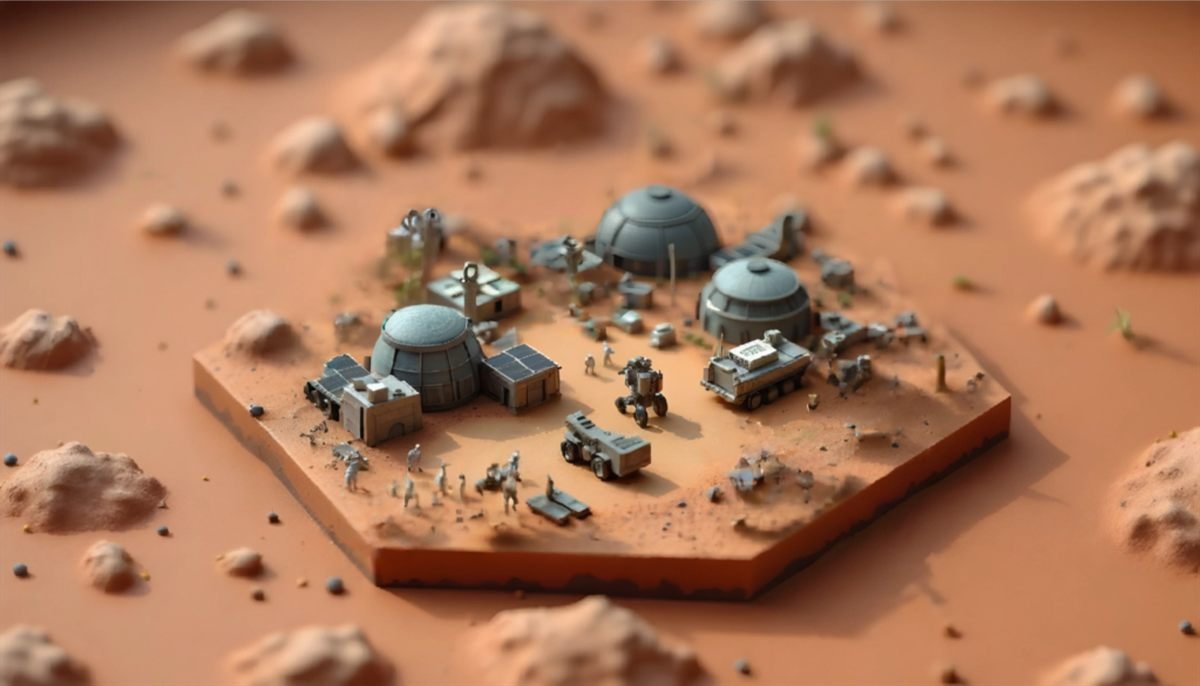
Student teams form their own companies to design and model a colony on Mars for 650 colonists, competing to win the contract from the Interplanetary Development Corporation (IDC).

Begin the mission

About the mission

An industry simulation,
not a worksheet.

Mission Mars puts your team inside a real client brief. You research, design, and pitch exactly as a company would for a paying client, because that is the job you are training for, long before you get the title.

01

Why Mission Mars

Your team takes on a real client brief (RFP), researches it, designs a response, and presents it. That is the same cycle that drives most careers: build something, then convince someone to buy it. Along the way you will manage deadlines, divide labour, and keep a team moving when opinions clash. No worksheet teaches that.


02

The Interplanetary Development Corporation

By 2035, the IDC had grown out of the private aerospace firms supporting Earth's first lunar bases. Profitable lunar mining, refuelling services, and a spotless safety record made it the industry’s authority on off-world infrastructure development. After proof-of-concept landings on Mars in 2050, it turned to its next challenge: a permanent colony on Mars. The year is now 2088, and the call for proposals is open.

Discover IDC

01 Mission Index 45.0000° N / 137.0000° E

Earth was only the beginning.

Join a select crew of young explorers on a STEM mission that challenges you to think like a scientist, build like an engineer, and solve like a mission specialist. Mars is waiting.

The brief comes from the Interplanetary Development Corporation: design, build, and operate a colony for 500 permanent residents and up to 150 transient guests (a total design load of 650 people) that is self-sufficient, defensible, and commercially viable within a 10 years time frame.

The programme

01

Orientation

Meet your crew. Learn the mission. Prepare for Mars.

02

Mars Science

Explore the planet. Study its environment. Ask big questions.

03

Engineering

Design solutions. Build prototypes. Test your ideas.

04

Mission Ops

Plan the mission. Work as a team. Solve real scenarios.

05

Final Launch

Present your mission. Showcase your work. Become mission ready.

Real SimulationIntensive. Immersive. Impactful.
1 MissionCollaborate. Create. Launch.
Limited ResourcesDistant world. Endless possibilities.

Who it's for

Designed for curious minds.

01

Students

School-age explorers who want to build something real, not fill in another worksheet.

02

Parents

Parents looking for a programme that develops engineering thinking, teamwork, confidence and potential career pathways.

04

Beginners

No prior engineering experience required. Curiosity, focus and willingness to learn are crucial for your success.

Common questions

Before you enlist

Who can take part, how teams are formed, what is provided, and how the competition is judged.

Students aged 13 to 17 can participate. Mission Mars develops skills through guided, hands-on participation, so no prior engineering experience is required. Curiosity, focus and willingness to learn are crucial for your success.

Students form company-style teams, elect a CEO to coordinate the project, and assign tasks by specialisation. Final team formation details are shared with registered families and schools ahead of the programme.

Between 10 and 12 students per company, including the elected leader. You set your exact crew size when you register your team.

In most cases, yes. Teams usually form around existing friend groups or classes. Schools registering several teams may balance numbers across cohorts, and your supervising adult will confirm the arrangement for your group.

A one-metre hexagonal modelling board, a mission handbook and project log, a pen drive preloaded with technical guidelines, physical and online workshops, and access to shared tools and build areas. The full materials brief is on the Modelling Mars page.

Full school uniform for the presentation, plus your laptop, pen drive, up-cycled materials, research documentation, and essential stationery (pencils, rulers, notebooks, artistic supplies, and so on). Check the material restrictions before adding anything unusual.

Registration portal

Enlist your team for the next mission.

Register your crew as a company. Nominate a team leader, list your members, and name the adult supervising the build. We will contact you with dates, fees, and the mission briefing.

01

Form your companyName the team, elect a leader, and assemble the crew.

02

Receive the mission briefWe share the RFP, schedule, and judging criteria.

03

Prepare for launchMeet the other companies and start the challenge.

Team Registration

Form MM-01

Registration runs on its own page, so your team can fill it out without losing this one. Have your company name, crew list, and a supervising adult's details ready.

  • Company name and school or organisation
  • Team leader (CEO) and 9 to 11 crew members
  • One supervising adult, responsible throughout
Start team registration

Bring it to your students

Interested in bringing Mission Mars to your school or organisation?

Tell us who you are and we will send the programme pack, the requirements, and the dates we can offer you.

Click here